
In an era of evolving digital threats spanning two decades or more, organizations are increasingly concerned about their cybersecurity posture and seek to utilize a centralized platform to ensure security within their IT environments.
GRC stands for Governance, Risk, and Compliance, which is a strategic framework that provides a comprehensive and structured approach beyond technical fixes by integrating these three disciplines into an organization’s objectives.
The primary purpose of the GRC framework is to integrate governance, risk management, and compliance functions. It creates a centralized defense mechanism to manage cyber threats, identify and reduce risks, align information security with business objectives, and enable organizations to meet regulatory compliance requirements.
The GRC framework enables organizations to make informed decisions, enhances resilience, increases transparency and accountability, reduces incident recovery costs and regulatory penalties, and fosters high stakeholder confidence, including that of customers, investors, and regulators, in terms of commitment to governance, risk, and compliance.
What is GRC in Cyber Security?
Organizations use Governance, Risk Management, and Compliance (GRC) as a framework to protect their digital assets against cybersecurity threats. This approach aligns IT and management efforts with business objectives.
Three Pillars of GRC
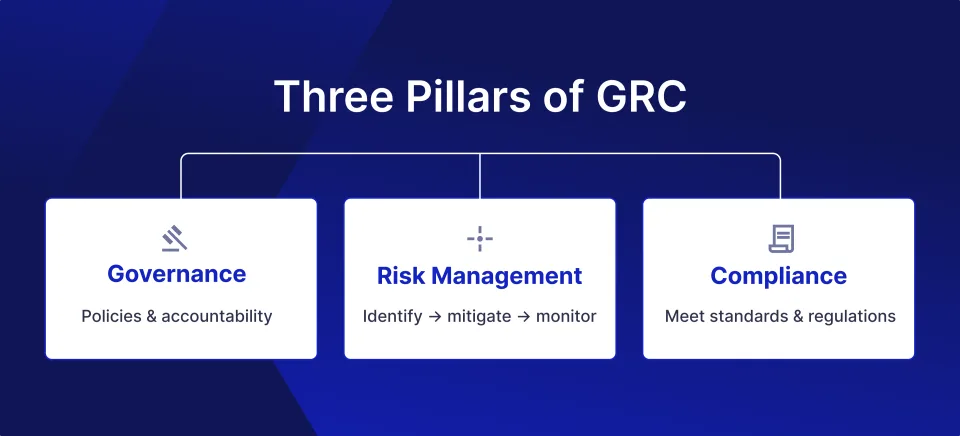
As the name GRC implies, governance, risk management, and compliance are the three interconnected pillars of a strong cyber security posture.
Governance
The governance pillar sets the direction by defining the standards, policies, rules, and processes that organizations should set up to guide and control their cybersecurity operations and decisions. This involves defining and assigning clear roles and responsibilities for asset security, and ensuring accountability at all levels within the organization. Top management should set the tone from top to bottom, emphasizing the importance of cybersecurity, accountability, and a culture of compliance throughout the organization, aligning these values with the organization’s overall goals.
Risk Management
This pillar defines the processes for identifying vulnerabilities such as malware infections, misconfigurations, outdated systems, or phishing attempts before they can be exploited. Once the risks are identified, the process involves further analysis and prioritization based on their impact, nature, and score, enabling organizations to focus on assigning resources and making decisions to mitigate high-level threats first. Early identification, analysis, and mitigation help prevent threats from escalating into major data breaches or critical security incidents. After the initial cleanup of the systems from threats, this process becomes continuous through ongoing monitoring and reevaluation of the environment for any new threats that may appear.
Compliance
The compliance pillar ensures that organizations adhere to related industry regulations, such as ISO 27001 or NIST, and follow rules and standards such as the General Data Protection Regulation (GDPR), the Health Insurance Portability and Accountability Act (HIPAA), and the Payment Card Industry Data Security Standard (PCI DSS), as well as internal policies that govern the operations. Meeting compliance helps organizations avoid legal issues, financial penalties, and reputational damage, along with maintaining the trust of customers, partners, and regulators.
Significance of GRC in Cybersecurity
GRC is crucial in the modern cybersecurity world, where new threats emerge daily in the form of known or unknown vulnerabilities, unsupported or unpatched operating systems, and third-party vendors’ applications. Cybersecurity does not just require firewalls, endpoint protection, and audits. It requires governance, risk management, and a compliance framework directly integrated into business operations.
Embedding Security into Operations
Organizations often adopt reactive approaches, addressing security issues only after they occur, rather than implementing proactive strategies to prevent them from becoming serious problems.
GRC embeds security directly into operations by implementing and monitoring controls that identify risks early, such as phishing, malware, or exposure to third-party applications. This provides their assessment, mitigation, and prioritization with the help of various tools, ensuring they do not escalate into a security incident or data breach.
Cybersecurity incidents and data breaches are common causes of costly downtime and business process disruptions, such as when an ERP application or accounting software is unavailable due to vulnerability management or compromise. Early detection and handling of such issues reduces downtime. Organizations can maintain their systems and data security by implementing GRC features, such as encryption, access management, monitoring, and incident response planning, into their security operations.
Keeping Compliance Efforts on Track
As the regulatory landscape for cybersecurity and data protection becomes increasingly complex and constantly evolving, it is challenging for organizations to meet compliance requirements. GRC implementation is crucial for organizations to address those regulatory requirements and prove compliance. There are specific security frameworks for service provider organizations, such as SOC (System and Organization Control) Reports (1, 2, and 3). They must prove compliance to their clients and build trust by implementing GRC and getting certified. Compliance was previously viewed as merely a periodic checklist-driven exercise, typically conducted just before the annual audit. Still, GRC enables a continuous automated process integrated into daily workflows, ensuring that organizations are always ready for compliance and audits. GRC enables organizations to communicate better and gain an understanding of compliance and security by providing structure, clarity, and visibility across all departments. This improves collaboration between cross-functional teams such as IT, Legal, Finance, HR, and Operations. The GRC framework also helps organizations stay updated with regulatory changes and emerging threats by closely monitoring both landscapes, allowing them to update their policies and controls as needed to adapt to these changes.
Components of an Effective GRC Strategy
Strong governance, proactive risk management, and diligent compliance form a resilient security framework in core business operations.

Governance
Governance, as the foundational component of GRC, provides structure and necessary oversight to align the cybersecurity management program with business priorities. It defines internal policies, clear roles, responsibilities, and processes for accountability and security-related decisions. The governance scope encompasses critical areas, including the enforcement of security policies, aligning security objectives with the internal team’s behavior, and controls for data access rights. Security becomes part of governance by following internal policies, making it a shared responsibility across all departments, rather than just an IT-related issue.
The following are some key elements of governance:
- Clear Policies: These are rules helping decision-making, employee behavior, ensuring operational consistency, assisting the organization to meet its ethical and legal obligations, and aligning with its values.
- Strong Processes: Processes are set up to define how the tasks will be executed, risks are managed, performance is measured, and incidents are responded to. If the processes are well-defined, organizations can improve efficiency, increase accountability, and reduce ambiguity.
- Stakeholder Engagement: Governance directs stakeholders’ engagement, including employees, investors, regulators, and customers, to promote transparency, trust, and credibility for creating a strong relationship.
- Strong Organizational Structure: GRC success is dependent on a strong organizational culture that promotes integrity, accountability, and teamwork. A strong culture also ensures a commitment to ethical behavior, which in turn fosters a positive work environment.
- Commitment to Ethics: Ethical commitment shows governance status of an organization, meaning they can build trust with customers, partners, and regulators by adhering to moral principles, complying with the law, and making sure that everyone is taking responsibility for their actions.
Risk Management
Risk management provides organizations with visibility into potential threats and processes for identifying, evaluating, and developing a clear strategy to manage them. This involves identifying risks across all internal systems, sensitive data, and third-party applications. Upon identifying risks, they can be analyzed and prioritized based on their impact and severity on business processes, allowing resources to be allocated to mitigate critical risks first.
Risk management is a continuous process as the threat landscape is constantly changing, driven by changes in technology, regulations, and business processes. Therefore, continuous monitoring and assessment are essential, along with controls adjusted accordingly. The risk management process provides stakeholders with critical data, enabling them to make informed decisions and allocate resources accordingly.
Core steps of risk management are as follows:
- Risk Identification: Involves identifying potential risks using standard techniques such as brainstorming sessions, employing SWOT (Strengths, Weaknesses, Opportunities, Threats) analysis along with historical incident data review, and using standard checklists.
- Risk Assessment: Risk must be assessed and prioritized after identification is done, by assessing the potential damage impact or likelihood of occurrence. This can be measured using a qualitative method, such as risk impact as high, medium, or low, or using a more advanced technique, such as Monte Carlo simulations, to model the effect.
- Risk Remediation and Mitigation: Organizations must decide how to address those risks after the assessment is done, either remediating them by implementing controls or eliminating them by isolating the systems or activities causing them, or accepting the risk based on its minimal impact and not taking any action. Acceptance depends on the likelihood of effects or a higher mitigation cost.
- Continuous Monitoring and Assessment: Risk management is not a one-time process that stops by mitigating the existing risks. It continues by conducting regular reviews, performance reports, and audit reports to find new risks and ensure that existing mitigation strategies are effective in managing them.
Compliance
Compliance is the process that helps organizations adhere to regulatory requirements and internal standards, such as ISO/IEC 27001 and the NIST Cybersecurity Framework, as well as laws like GDPR, HIPAA, PCI DSS v4, and the NYDFS (New York Department of Financial Services Cybersecurity Regulation). Embedding compliance directly into day-to-day workflows by enforcing automation, monitoring, and effective communication demonstrates to customers and stakeholders that security is a core business function.
There are several types of compliance, including the following:
- Regulatory Compliance: This kind of compliance is referred to as organizations meeting the requirements of government-imposed laws and regulations, such as healthcare organizations that must follow HIPAA to protect patient data, NYDFS for financial services, or SOX for financial reporting of publicly traded companies.
- Corporate Compliance: These are the internal policies and procedures set up by organizations themselves, such as the Dodd-Frank Act, requiring a company to implement strong internal compliance programs to prevent fraudulent activities. The Dodd-Frank Act was enacted in response to the 2008 financial crisis, resulting in the creation of two regulatory bodies: the Financial Stability Oversight Council (FSOC) to monitor systemic risks and the Consumer Financial Protection Bureau (CFPB) to protect consumers from fraudulent practices.
Integration and Tooling
The final crucial component is that the three pillars of GRC must be coordinated and integrated to make it efficient. A single GRC platform achieves this by combining governance, risk management, and compliance into a central hub. It consolidates data from various sources, such as IAM, SIEM, and business applications, aligns workflows, and improves the team’s visibility through dashboards and reports. GRC tools are not just software. They enable strategy to scale and focus on decisions, automate risk assessments and policy enforcement, streamline audit processes with reporting and collected evidence, and map controls to various regulatory frameworks by automating data collection and documentation.
GRC Use Cases in Cybersecurity
The GRC framework is not just a theoretical concept; it is a practical tool for addressing the most pressing cybersecurity challenges. Embedding GRC rules and tools into daily tasks enables organizations to manage complex processes with increased visibility and resilience.
Third-party Risk Management
Organizations rely on vendors, partners, and suppliers for business operations, which creates risk exposure. They can use GRC to conduct a vendor assessment process by evaluating and monitoring their security and compliance practices, including penetration test results, regulatory certifications, and standard security questions, as well as collecting and analyzing their responses. Organizations can correlate risk data across multiple third-party suppliers and identify risks, such as numerous vendors using the same vulnerable software. They can then enforce access control to least privilege principles, which reduces exposure to supply chain threats.
Audit and Compliance Readiness
Preparation for regulatory audit, such as HIPAA or SOX, is a significant use case. GRC solutions provide a central repository for all the evidence collection and documentation, including policies, procedures, access logs, vulnerability scans, and control-related documentation. Additionally, GRC automates data collection to reduce manual effort and human error, ensuring that the information provided to auditors is accurate and complete. GRC solutions provide real-time dashboards and reporting capabilities to compliance managers, along with continuous monitoring of the organization’s compliance posture and any gaps before the audit even starts.
Security Event Coordination
GRC integration into security operations workflows can provide coordinated action and effective incident response. Security Information and Event Management (SIEM) systems enable organizations to detect threats efficiently. GRC platforms integrate with SIEM solutions, allowing for the automatic triggering of a workflow within the GRC platform when suspicious activity or a threat is detected. This ensures that incidents are managed with a compliance perspective, not just technically contained. A GRC platform can manage the entire response process when a suspicious activity is flagged by automatically assigning tasks, such as patching, revoking access, or updating controls, to individuals or teams. It also tracks remediation progress and documents compliance actions.
Five Steps to Implement a GRC Strategy

Implementing a GRC Strategy requires careful planning and execution. The following five steps demonstrate a clear roadmap for a successful GRC setup.
1. Set Clear Objectives
The first and crucial step is to define what GRC should encompass, e.g., regulatory compliance, cyber risk reduction, operational alignment, or a combination of all three.
- Set clear objectives that are specific and align with business priorities and requirements.
- Target the specific applicable regulations such as GDPR, HIPAA, or PCI DSS.
- Focus on lowering the overall cyber risk profile of organizations.
2. Map Out Responsibilities
Collaboration, communication, and accountability are essential for a successful GRC program; gaps and overlaps can lead to failures without clear ownership.
- Define clear communication channels across the organization and promote collaboration across departments.
- Define roles and assign responsibilities to individuals, groups, and departments for accountability. Roles such as:
- A Business Leadership role involves oversight and allocation of resources.
- IT and Security Teams for managing technical controls, performing risk assessments, and responding to incidents.
- Legal and Compliance teams dictate regulatory requirements and policies, and monitor and operate compliance activities.
- A RACI (Responsible, Accountable, Consulted, Informed) chart is an effective tool to see clear visibility in roles and decision-making to ensure that everyone knows their responsibilities. This entire process avoids miscommunications and gaps.
3. Establish Policies and Procedures
After objectives and responsibilities are defined, the next step is to establish functional documentation of policies and procedures that contain rules and processes implemented across the organization, to avoid “back and forths”.
- Functional documentation involves governance expectations for how decisions are made, who is authorized to make them, and with structural oversight.
- Define risk protocols, such as methods for identification, assessment, reporting, and mitigation of the risks, and acceptable levels for the organization.
- Define specific internal and external rules and controls for compliance requirements that the organization must follow to ensure adherence.
4. Select and Configure Tools
GRC is a strategic tool that provides a framework and guidance for implementation. Still, it is technology that enables its implementation at scale, reduces manual efforts through automation, and prevents wasted time and energy.
Look for the features in the GRC platform that support your organization’s goals, along with the following key features:
- Provides automation for streamlining repetitive tasks, evidence collection, risk management, and compliance reporting.
- Provides a centralized reporting system and real-time dashboards for overall security and compliance posture.
- Provides integration with other systems such as SIEM, HR systems, or vulnerability scanners to fetch required data.
5. Start Small and Scale
Implementing a GRC program across the entire organization at once can be overwhelming and may introduce unforeseen issues. That is why a phased approach is always recommended.
It is manageable and leads to long-term success.
- Start with a pilot program targeting a specific business area, including a few people only. This will allow the team to evaluate the tools and processes in a controlled environment.
- Gather feedback from the individuals involved and analyze the results to find what is working and what requires improvement. This feedback will also provide insight to adjust the workflows, policies, and configurations accordingly.
- Once the pilot program is successful with adjustments and improvements, roll out the GRC program in further phases across the organization, continuously monitor for further improvement and effectiveness of the complete GRC.
Modern GRC Cybersecurity and Its Evolution
Historical Context of GRC
The GRC concept is not new, but it has undergone a significant transformation to become applicable in the digital landscape. Understanding its evolution is the key to understanding its needs and capabilities. Governance, Risk Management, and Compliance has been utilized in business operations through written policies, external laws and regulations, codes of conduct, risk assessment, and informed decision-making. However, these were being managed in separate silos. It was not until the early 2000s that emerging corporate scandals, such as those involving Enron and WorldCom, highlighted the need for further oversight of business operations. This led to the enactment of the SOX law and additional research by Forrester, which officially introduced the term “GRC” as a named solution in 2002.
Inefficiencies of Traditional GRC
Early GRC programs were often labeled with different names, such as Enterprise GRC, Compliance GRC, or Organization GRC, which usually confused customers about which to choose and frequently lacked the true technical capabilities of a centralized GRC platform.
There were common inefficiencies in traditional GRC platforms, such as individual components not communicating with each other and acting independently. This led to security gaps, a lack of data aggregation, and complex, time-consuming metrics in charts that were not interoperable. They also demonstrated segmented visibility into an organization’s risk posture, meaning data from one part of the system did not correlate with data from another part, which led to increased errors and forced employees to revert to using spreadsheets, thereby delaying compliance.
Organizations that need to meet multiple regulatory requirements face a time-consuming and costly process. An assessment could take months to a year using the early GRC tools. Cross-referencing GRC controls, which involves mapping various regulatory requirements to a single security control, requires new or duplicate workflows and additional resources.
Shift to Digital GRC
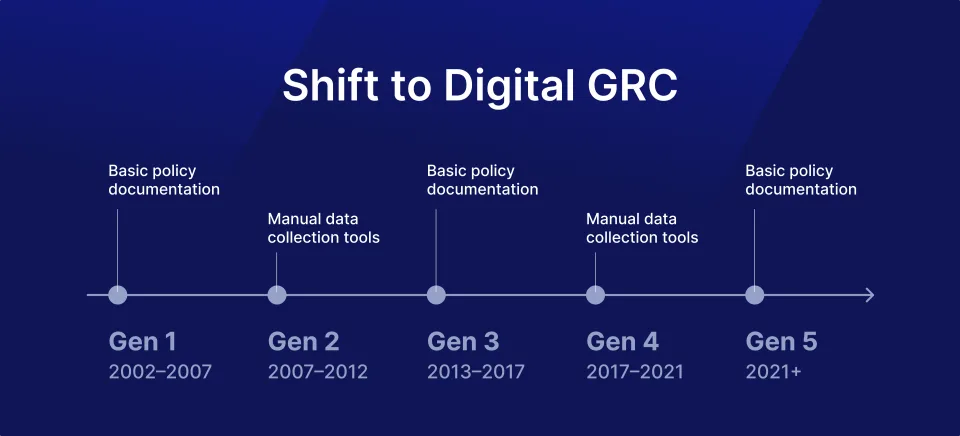
Following its proper introduction, GRC has become a valuable tool, designed to help organizations manage their complex digital business processes.
- For the next five years, from 2002 to 2007, which is often called the first generation of GRC, early platforms were just a transition from older, manual, and paper-based methods and were sufficient only for compliance-related challenges, focused on handling internal controls over financial reporting, SOX compliance, and related IT controls. As businesses increasingly adopted GRC platforms, they encountered difficulties and limitations stemming from the growth of cybersecurity threats, an increase in regulatory changes, and a substantial volume of data. Cybersecurity and compliance teams expressed growing frustration, citing that existing GRC solutions cannot manage the increased demands of security and compliance in their dynamic environments.
- From 2007 to 2012, GRC’s second generation expanded to other areas such as audit management, enterprise risk, and operational risk management, and a wide range of understanding beyond financial controls compliance regulations.
- The third generation of GRC platforms, specifically from 2013 to 2017, expanded more into the functional areas, serving the needs of the related departments within an organization, such as risk management, compliance, legal, finance, audit, security, health and safety, and more. Although the central hub was still in place, it was insufficient to manage everything. This requires integration with other department-related solutions for risk aggregation, normalization, and reporting, as well as with other GRC solutions.
- Generation four of GRC from 2017 to 2021 felt the need for highly configurable technology, providing benefits to the entire organization, configurable without advanced knowledge or certification. Organizations were concerned that functionality would be broken during upgrades due to customized coding; several vendors provided managed solutions to maintain customizations. User interfaces were highly intuitive and engaging; some legacy GRC solutions have attempted to provide new interfaces, but the underlying architecture and data handling were not properly achieved. ERP giants such as SAP and Oracle have provided robust features, elevating GRC to a new level of value that organizations can derive.
- Generation five GRC from 2021 onward has seen embedded artificial intelligence and machine learning into GRC solutions, natural language processing, and predictive analytics in dashboards and reporting tools, which have taken the technology to the next level.
GRC vs. Cyber Risk Management
As organizations face an increasing number of cyber threats, the focus remains on securing their assets. While GRC provides an enterprise-ready framework, a more specialized approach is emerging as Cyber Risk Management, which is seen as the future of GRC cyber security.
GRC is a broad framework designed to ensure organization-wide compliance and risk management. It encompasses a range of areas, including cybersecurity, data privacy, financial reporting, ethical conduct, operational risks, supply chain oversight, legal compliance, and overall governance. Cyber risk management, though still part of a broader GRC platform, is more focused on IT infrastructure, cyber threats, and data-related risks such as insider threats, ransomware, third-party software vulnerabilities, or cloud misconfigurations. GRC sets overall oversight and rules, while cyber risk management moves beyond general GRC by dynamically finding, analyzing, mitigating, and monitoring threats.
Advantages of Cyber Risk Management
The wide range nature of GRC may lead to separate efforts and a lack of prioritization for security teams, while cyber risk management offers them several unique advantages for threat management, such as:
- Provides efficiency and speed by streamlining processes focused on critical threats targeting IT infrastructure and data.
- Enables security teams to quickly respond to emerging threats instead of following a broader GRC set of rules.
- By focusing on security threats only, resources can be distributed efficiently for the most significant cyber threats.
- Cyber risk management promotes a deeper understanding of the threat landscape beyond check-the-box compliance.
- As cyber risk is evolving with the emergence of new attack vectors and threats, cyber risk management enforces proactive measures instead of just meeting the compliance requirement.
Conclusion on Future Focus
While GRC offers a valuable framework for the overall integrity of the business, cyber risk management is a more efficient and effective path forward towards threat management. It focuses on understanding new risks, streamlining security processes to manage them, and staying ahead of future threats.
What is Purpose of GRC Software?
Managing Governance, Risk Management, and Compliance in today’s complex digital landscape is difficult. GRC software appears as a critical solution to this problem. Their primary purpose is to provide a structured approach for governance, risk, and compliance, particularly in the context of cybersecurity. GRC solutions make oversight more manageable by providing a holistic view of an organization’s risk posture, breaking down silos between departments. GRC solutions help teams monitor threats, track compliance, manage policies, respond to changes, and mitigate risks.
Automation and Features
The power of GRC solutions lies in their automation features, which reduce time consumption, manual efforts, and make processes less prone to errors.
Key features of GRC tools are:
- Automation of internal audits by reducing manual evidence collection.
- Automation of risk scoring by prioritizing risks with severity and impact score.
- Automated policy enforcement by integrating with identity management systems and endpoints.
- Provide powerful dashboards, real-time visibility, and reporting.
- Provide support for regulatory mapping with controls.
- Integration with systems such as HR, IT, IAM, or SIEM.
GRC Tools and Software
Pathlock Cloud
Pathlock Cloud is a GRC platform that offers a suite of solutions for automated risk management and compliance, providing deep visibility and granular control across SAP, Oracle, Workday, Salesforce, and numerous other ERP and Identity management platforms. Pathlock Cloud’s core purpose is to provide automated enforcement of access controls, insightful analytics on risk management, and automated, streamlined workflows to ensure security and compliance. It provides a customizable user experience for various stakeholders, including IT administrators, business managers, and auditors, through a single, unified dashboard. This allows them to monitor specific risks, generate reports, and receive alerts tailored to their respective roles.
Key solutions and features Pathlock Cloud offers are:
- Application Access Governance AAG (Access Risk Analysis, Compliant Provisioning, User Access Reviews, Elevated Access Management, and Role Management).
- Continuous Controls Monitoring CCM (Controls Management, Risk Quantification, and Change Monitoring).
- Cybersecurity Application Controls CAC (Vulnerability Management, Code Scanning, Transport Control, Threat Detection, and Application Profiler).
- Dynamic Access Control (Discovery and Classification, Dynamic Data Masking, Data Scrambling, Dynamic Authorization, Logging and Alerts).
- Cross-Application Visibility and Risk Management (Holistic Visibility, Minimize False Positives, Quick Time-to-Value, Risk Reduction with AI, Automated Reporting).
- Audit and Compliance Readiness (Risk Reduction, Audit Findings, Automate Controls, Audit-ready Reports and Dashboards).
Pathlock delivers fine-grained identity security and governance for business applications, reducing risk, lowering compliance costs, and ensuring audit and IPO Readiness.
- Pathlock provides the broadest set of fine-grained risk rules for the market-leading ERPs in the industry.

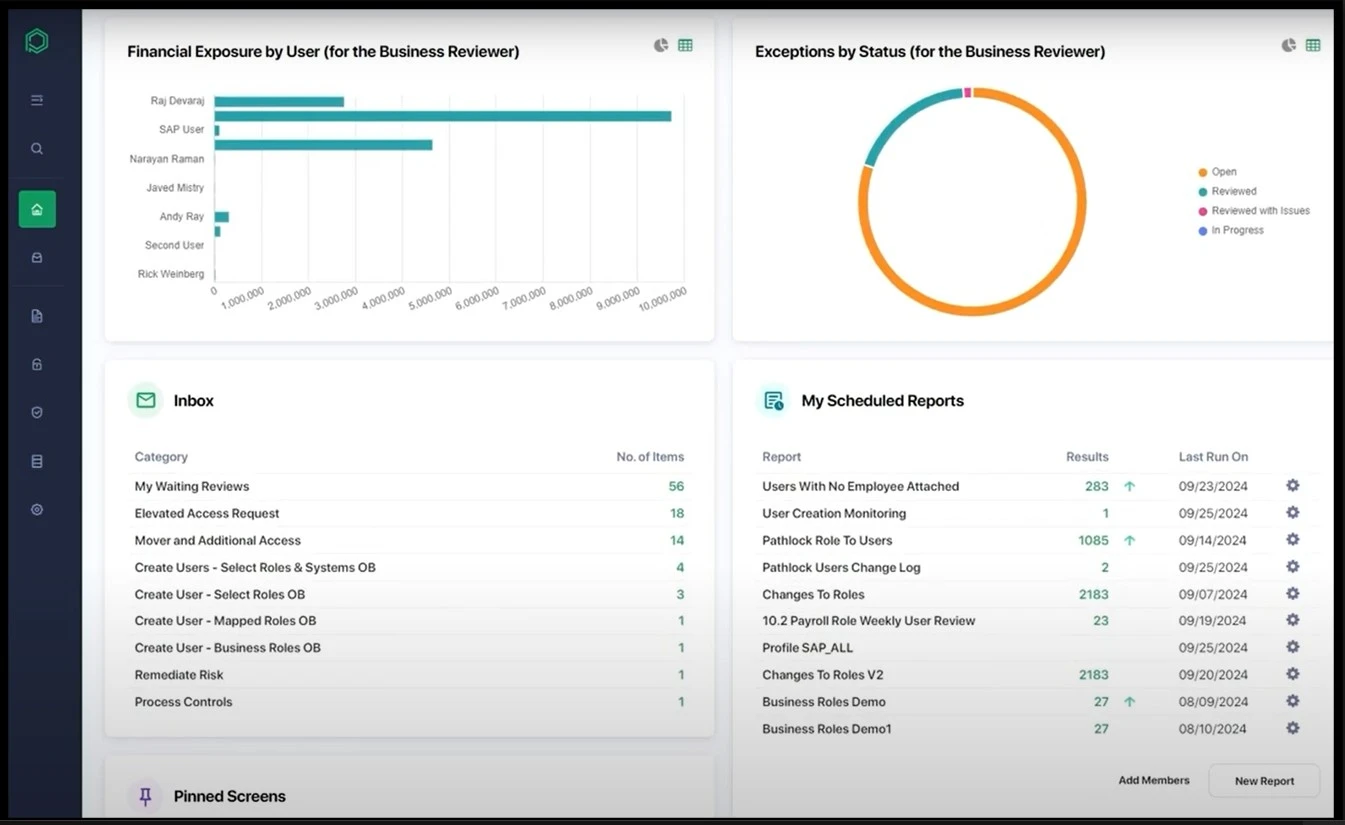
- Its distinct home screen allows users to tailor the home screen to show dashboard, reports, and events important to them based on their job responsibilities. The inbox highlights open items requiring attention, while the report list displays scheduled reports along with their last run results.
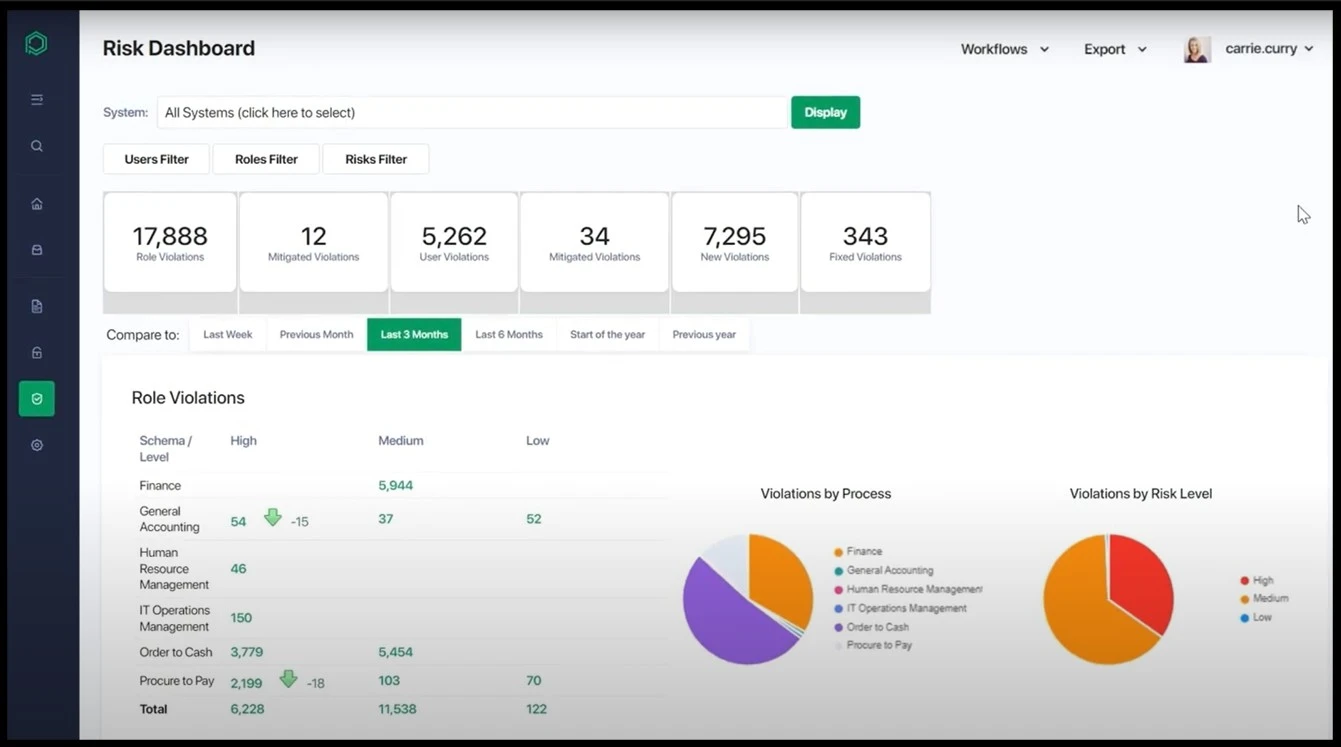
- Understanding risks goes beyond reports; it requires real-time visibility, which is where Pathlock Risk Dashboard comes in. It displays all risk trends, allowing users to filter by system, user, role, and risk. The key differentiator is the ability to display trends and user violations, categorized by process and risk level, along with risk improvement or deterioration.
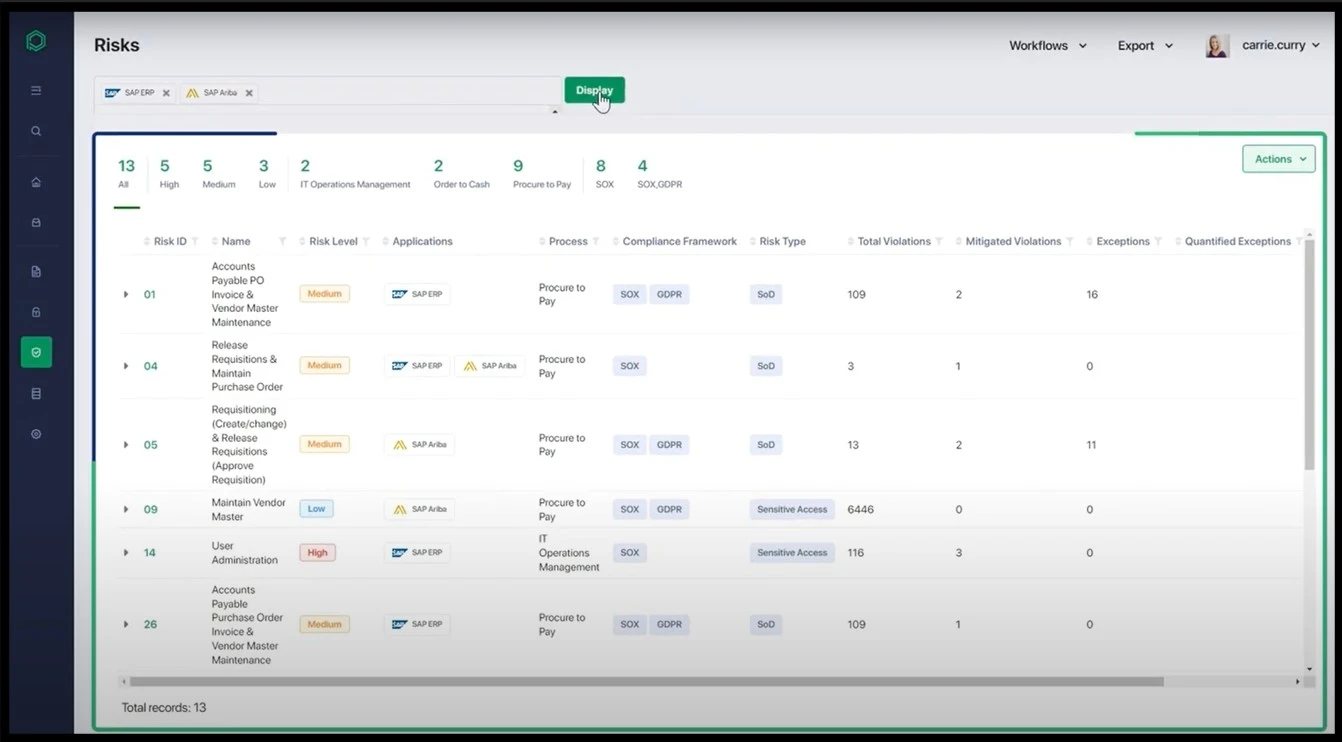
- Pathlock provides a cross-application risk assessment with the detected risk reports. You can click on the risk, which presents distinct information, including risk overview and detail, risk level, systems involved, and the risk and mitigation counts across employees and roles.
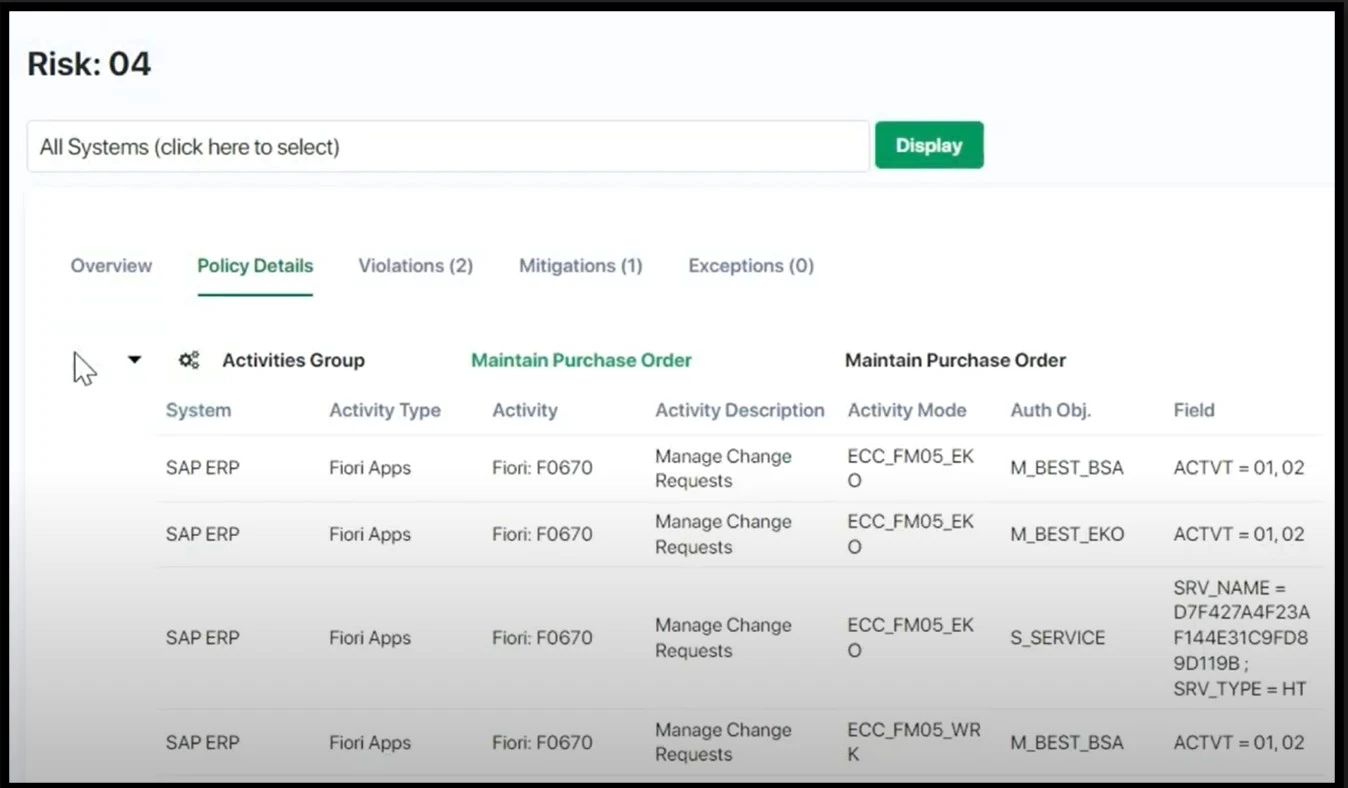
- You can also look at the policy details of a specific risk down to the fine-grained authorization level.
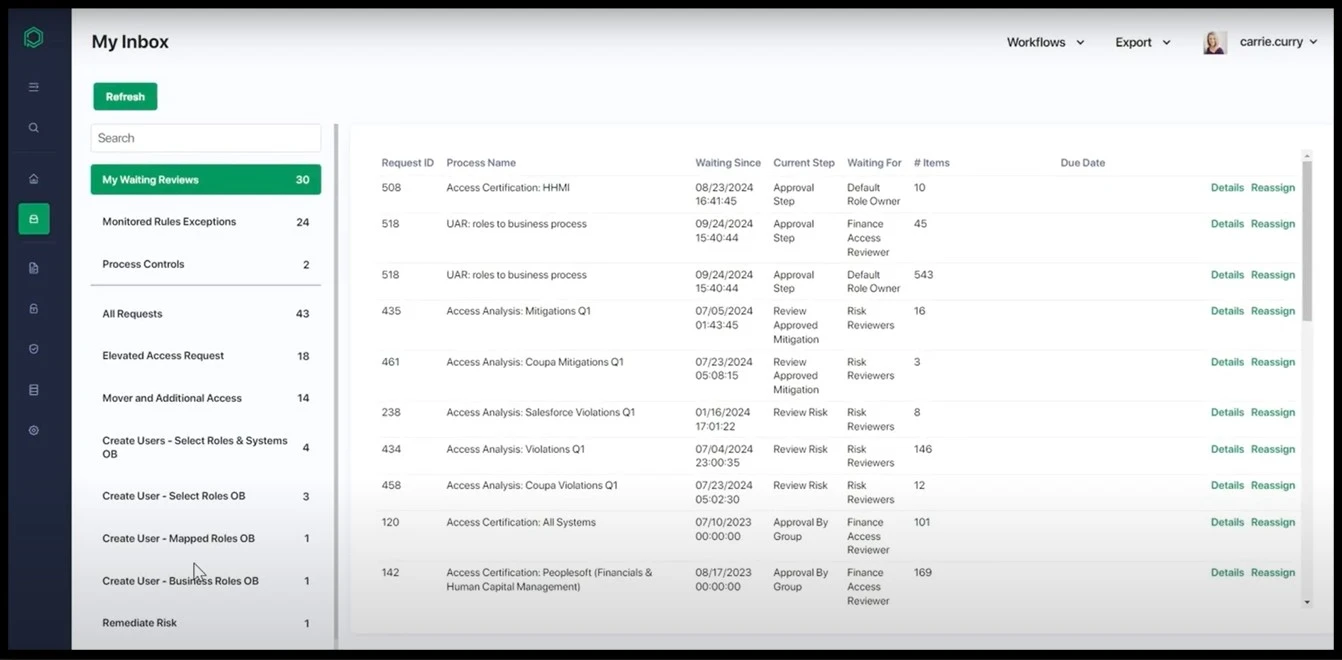
- Finding risk is just one part of the equation; managing and reviewing access is also critical. That is where Pathlock’s certification module comes in. The inbox in the certification module enables reviewers to view awaiting certifications, including user access, role access, controls, and risk certifications.
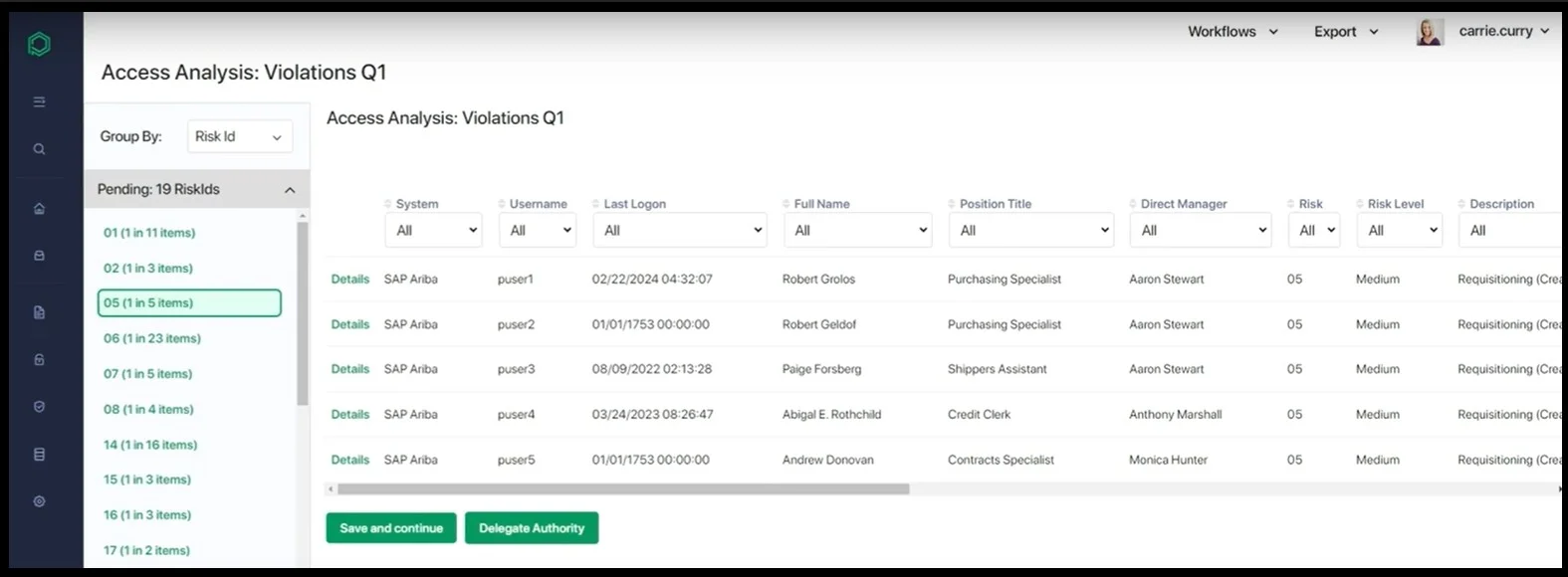
- Pathlock offers a unique ability to perform risk and control reviews, enabling faster and easier audit reviews for both SAP and non-SAP systems. You can sort reviews by user or risk ID. Risk is identified for the system, user, last logon date, user details, and their position, along with details of the risk and the mitigation controls applied.
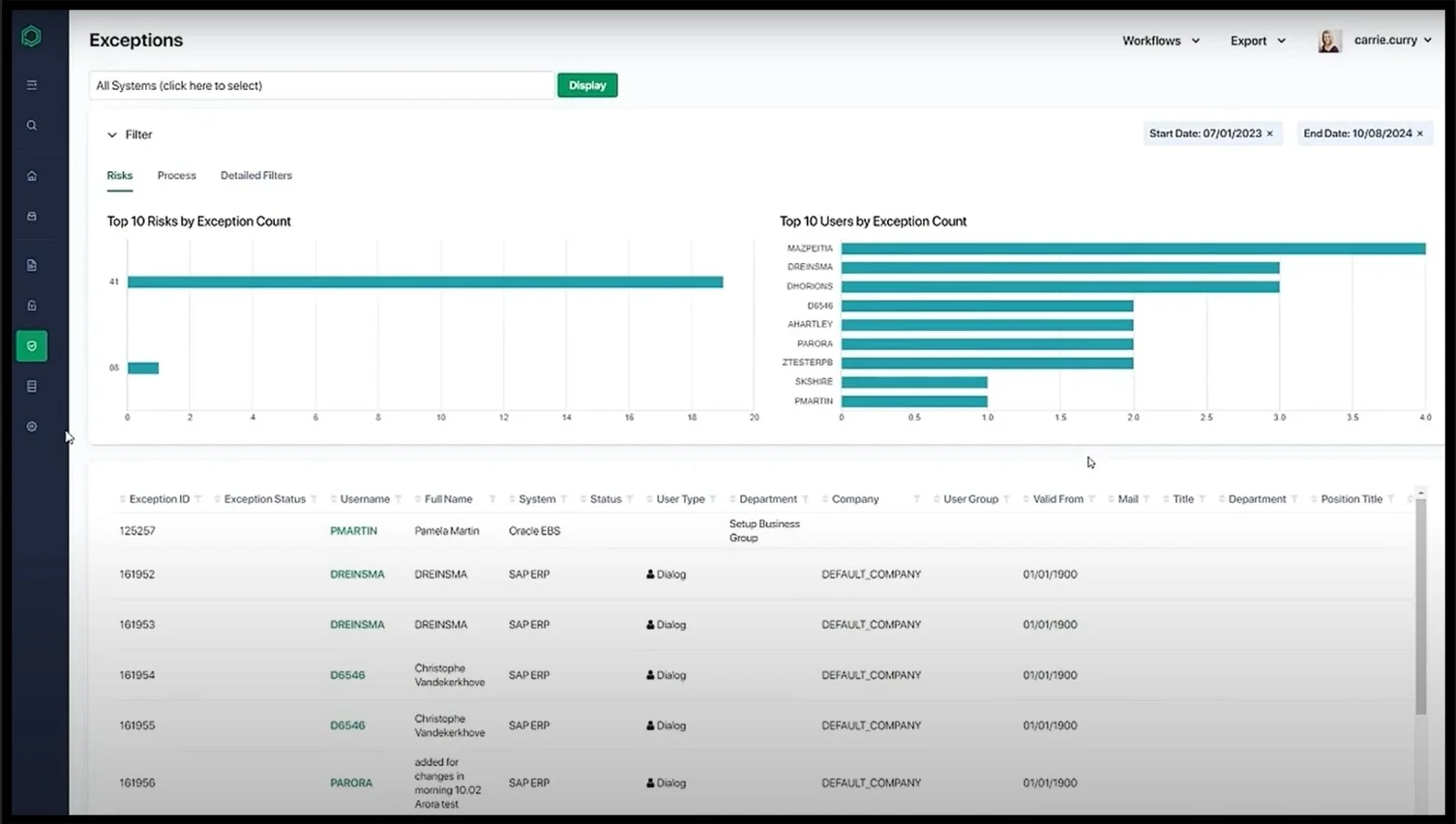
- Visibility into access is one thing, but what about how that access is being used? Pathlock Cloud provides continuous control monitoring with the Exceptions dashboard. It presents an easy-to-understand overview of the users who perform the SoD transactions.
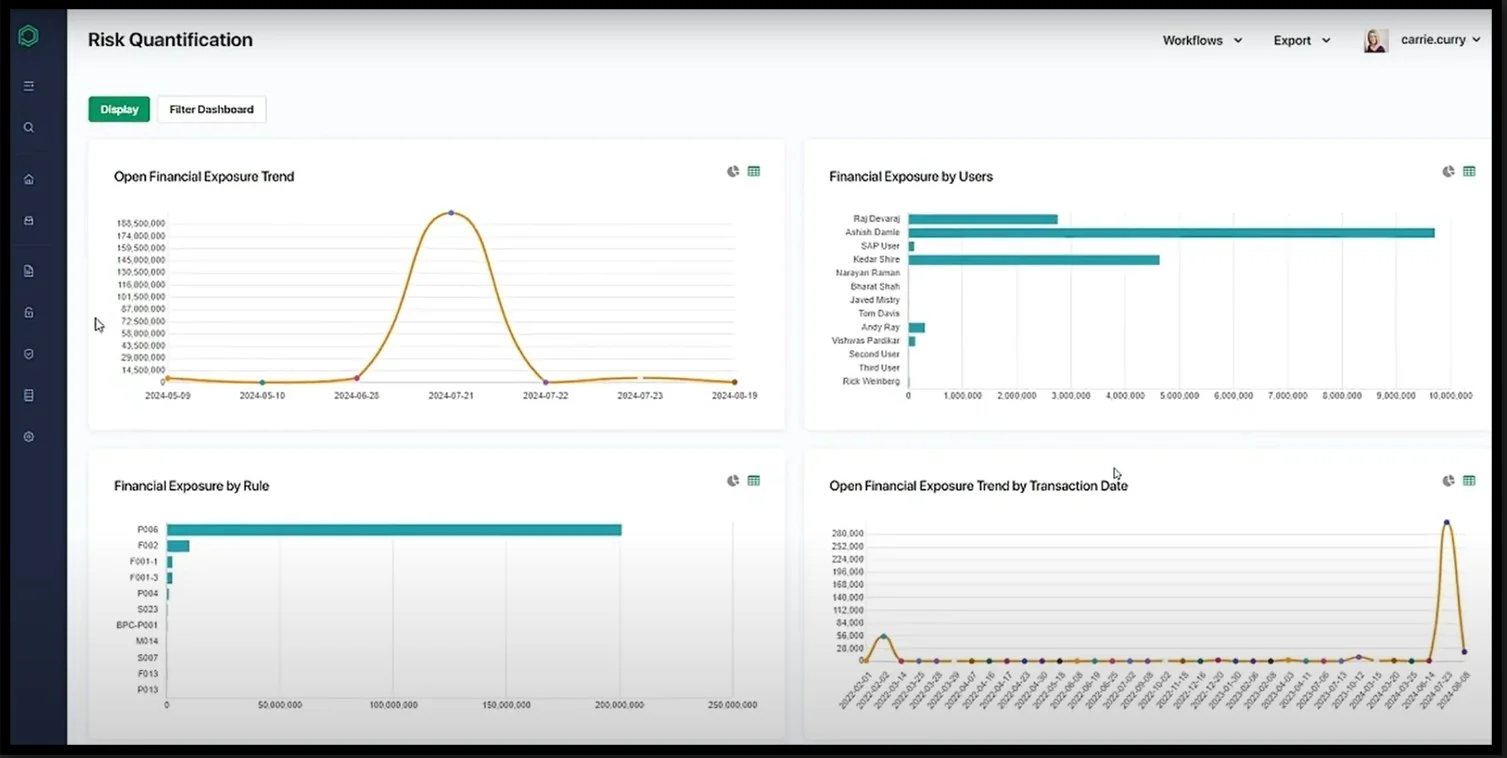
- Risk Quantification dashboard allows reviewers to understand further the overall organization’s risk posture, including financial exposure by trend, users, rule, and transaction date.
Frequently Asked Questions
What is governance, risk, and compliance?
Governance, Risk, and Compliance is a structured framework that organizations use to integrate their strategies, processes, and technology to achieve their business goals, adhere to compliance regulations, and ensure overall integrity and performance.
How does governance, risk, and compliance benefit organizations?
Implementing the GRC framework provides several benefits to organizations, enhancing their stability and success. This includes establishing a culture of responsible and ethical decision-making, as well as identifying and mitigating risks to ensure compliance with relevant regulations. This, in turn, leads to benefits such as increased operational efficiency, streamlined processes, and enhanced security against legal and financial risks.
What are the main components of governance, risk, and compliance?
GRC is a combination of three main pillars: governance, risk management, and compliance.
- Governance involves an overall management approach that senior management uses to set the direction and define goals and policies to ensure accountability.
- Risk management is the process of identification, assessment, and mitigation of risks and threats that could stop an organization from achieving its business objectives.
- Compliance pillar involves ensuring that organizations meet all the applicable laws and regulations, internal policies, and industry standards.
Is governance, risk, and compliance only crucial for large organizations?
No, GRC is important for all sizes of organizations. Large organizations have complex environments and dedicated departments with intricate regulatory requirements, making GRC essential for them. However, small and medium-sized organizations (SMBs) can also benefit from implementing GRC to protect themselves from financial, reputational, and legal risks by managing them effectively to meet compliance obligations.
Can governance, risk, and compliance be outsourced to a third party?
Yes, organizations can outsource their GRC processes to consulting firms and can use GRC solution providers that offer specialized professionals, services, and expertise.
What are the potential consequences of not having a proper governance risk and compliance framework in place?
Organizations are left vulnerable to financial and legal risks, as well as potential damage to their reputation, without a proper GRC framework. This can result in fines and penalties for non-compliance. A security incident or data breach could result in damage to reputation and loss of trust from stakeholders and customers.