
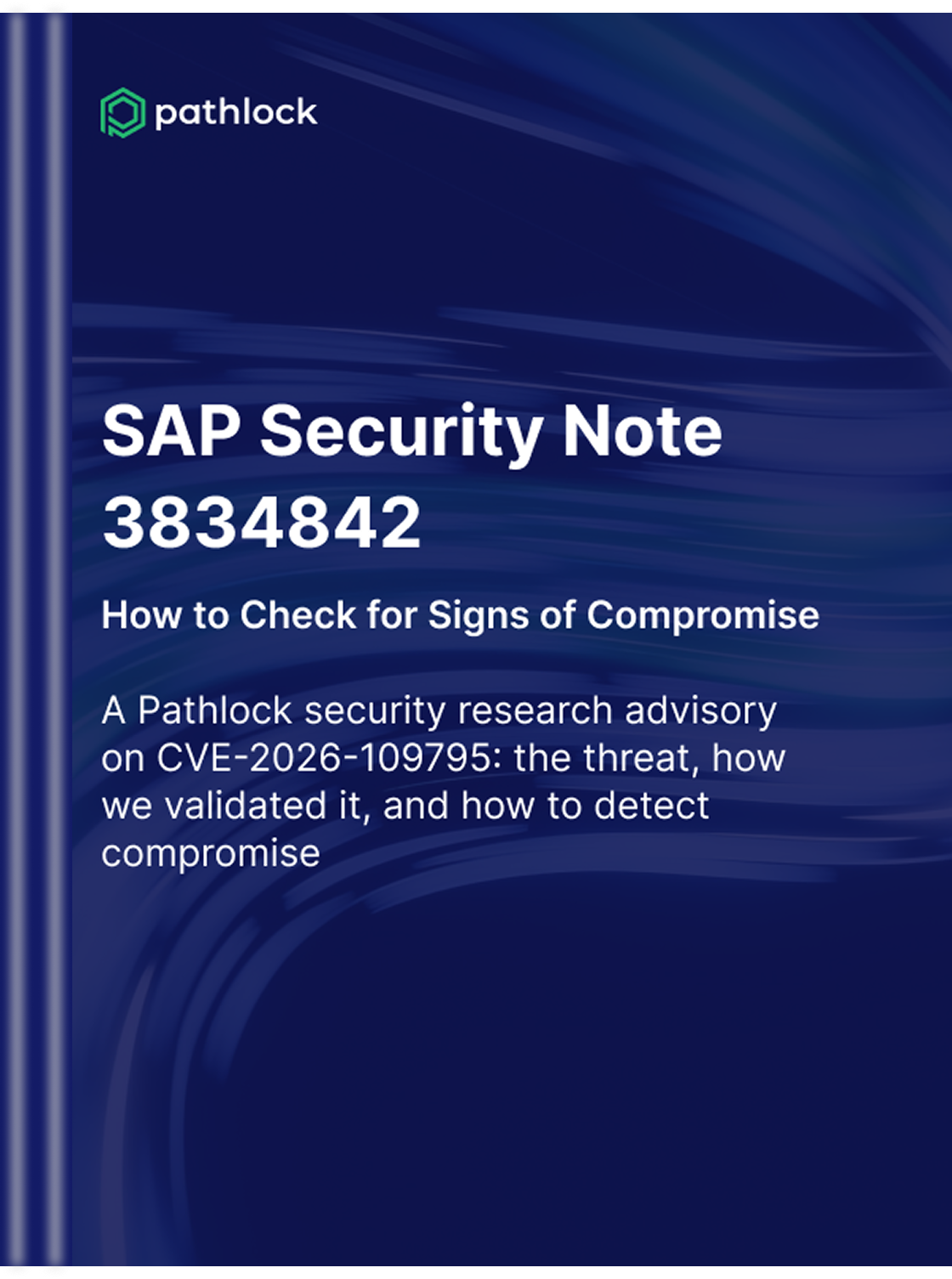
SAP Security Note 3834842: How to Check for Signs of Compromise
Exploitation of a critical vulnerability in SAP CRM components (CVSS 9.9) can be difficult to detect. Here is what security teams should patch and where to look for signs of compromise.
-
 Jonathan StrossSAP Security Analyst
Download Security Advisory
What Security Teams Should Do
-
Apply the complete fixInstall the fixed support package or every correction stage listed in SAP Note 3834842. Prioritize unpatched and partially patched systems. SAP states that there is no workaround.
-
Preserve logs before they expireExport Security Audit Log and statistical (STAD) records. Check that audit filters capture remote function calls and report starts. Retain audit logs for at least 90 days and STAD records for at least seven days. Enabling logging now will not recover earlier activity.
-
Check for unexpected callersSearch available history for calls to CATX_XSLT_TRANSFORM and CATX_XSLT_TRANSFORM2 from accounts or systems that do not normally use them. For technical accounts and trusted connections, identify the calling system.
-
Look for related activityReview execution records and authorization traces for the same account and time frame. Check for subsequent changes to users, permissions, code, remote connections or scheduled jobs, and for unusual outbound traffic.
-
Investigate suspicious combinationsAn unexpected call on an unpatched system, supported by execution evidence or suspicious follow-on changes, warrants an incident investigation. Restrict the suspected account and preserve evidence.
About the Vulnerability
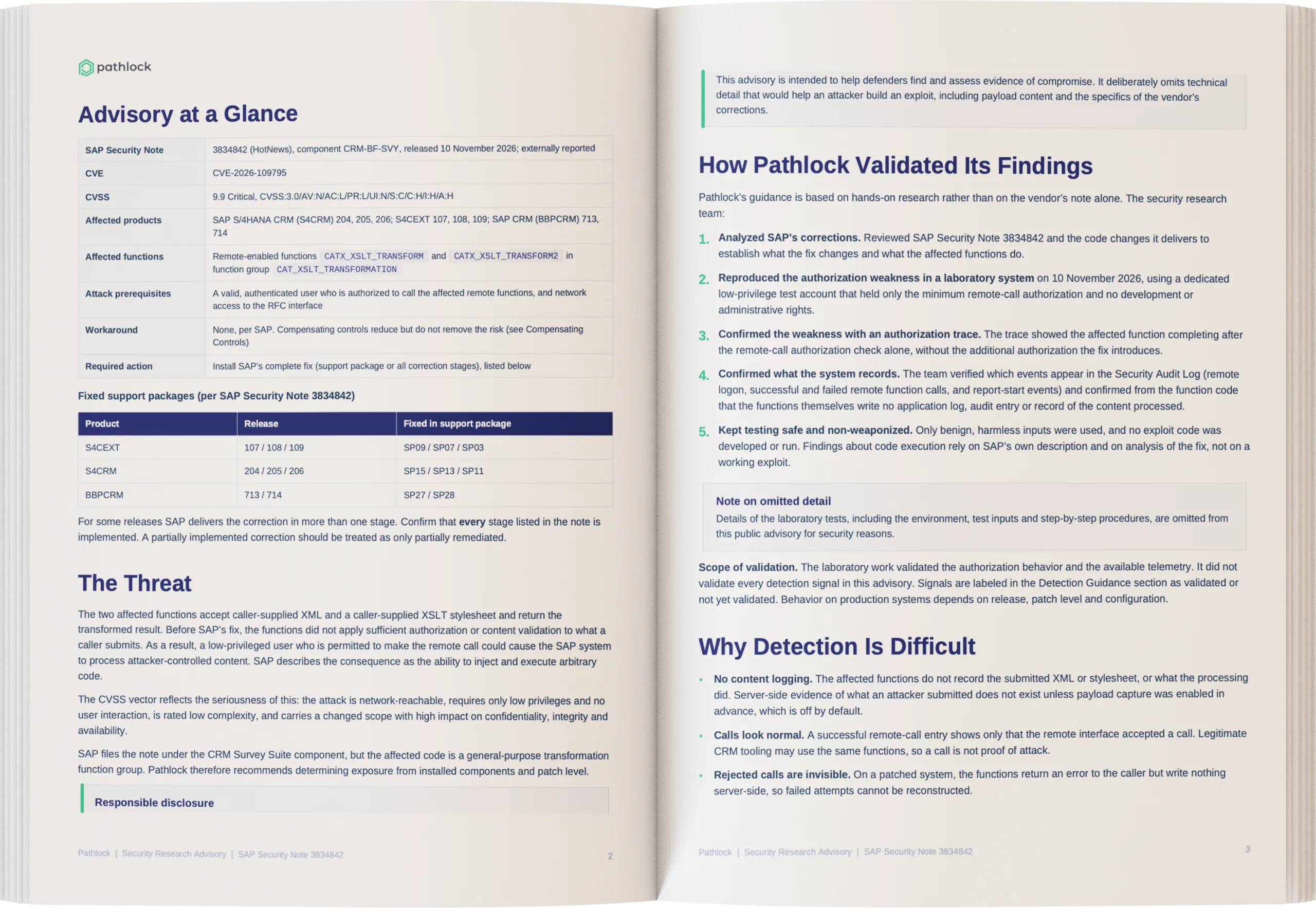
Applying SAP’s fix does not tell security teams whether a system was compromised before patching. The affected functions do not log submitted content or the actions it triggers. A successful remote call alone does not prove exploitation, and missing logs cannot rule it out. Pathlock’s research addresses this detection challenge. The team reproduced the authorization weakness and checked logging behavior using harmless laboratory tests. The advisory explains what evidence defenders can collect, how to connect suspicious calls to other activity, and which findings warrant an incident investigation.
In the Spotlight

Deep Dive Checklist for SAP S/4HANA Migration
Migrating from SAP ECC to S/4HANA is more than a technical upgrade - it’s a transformation. This checklist provides ste…

Mastering User Access Reviews: Overcoming Co…
User Access Reviews (UARs) are critical but often manual, inconsistent, and risky. This eBook explores the most common …

Securing PeopleSoft After ShinyHunters | Rem…
The ShinyHunters campaign showed that PeopleSoft risk extends beyond the perimeter. Once inside, attackers can exploit …